
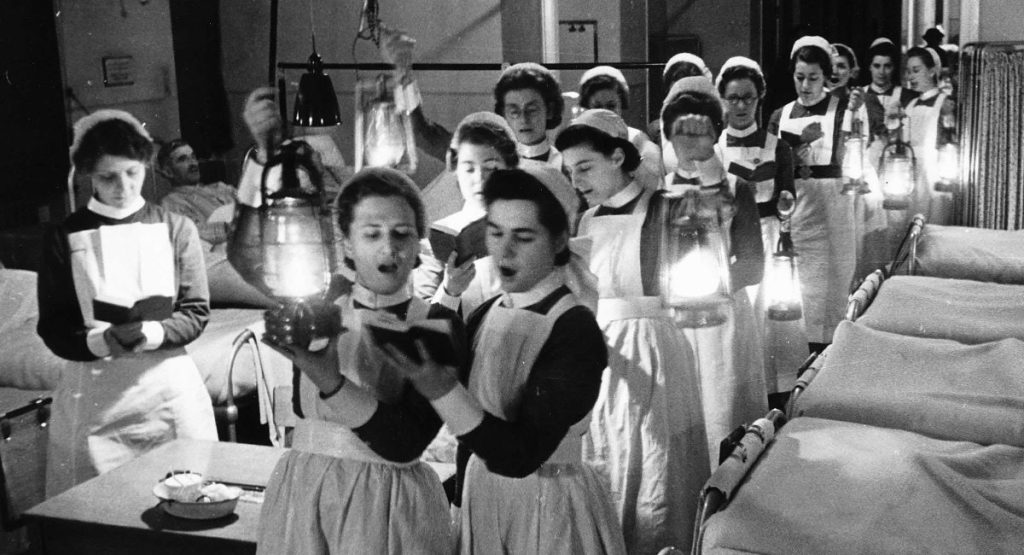
It’s 1918, near the end of World War I. Inside a crowded military hospital in New York, a young soldier lies trembling in his bed. He isn’t bleeding, has no visible wound. But his mind seems lost, haunted by fear and the perpetual stress of trench warfare. Doctors call his condition “shell shock.” They don’t know exactly what causes it, and have no reliable way to treat it.
But then something unusual happens. A nurse named Isa Maude Ilsen (born ca. 1870) sits down at a piano in the soldier’s room and begins to play. She sings to him as well. Ilsen believes that music might succeed where traditional medicine has not—that music can calm the mind and help the soldier heal.
Though she would hardly get credit for it, Ilsen is helping to create a new field: music therapy.
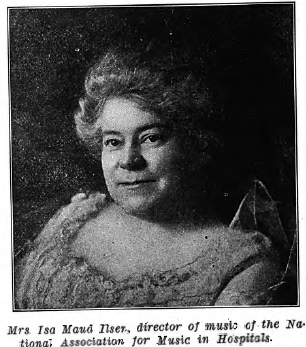
Portrait of Ilsen ca. 1926
Many think music therapy got started in World War II. By then, music was used for several military purposes. But its roots actually stretch back to World War I, thanks to pioneers like Ilsen who realized music could be used in a clinical setting to improve patients’ health. Ilsen, like other early music therapists, didn’t benefit from the formal training programs for music therapy we have today. Instead, she and other providers—mostly women—relied on observation, intuition, and a desire to serve those in need.
Early music therapists like Ilsen argued their practice was valuable for treating “shell shock” in particular. Soon after WWI began, doctors noticed a troubling pattern: Soldiers were getting sick, but without apparent cause. Symptoms ranged from paranoia, memory loss, insomnia, tremors, and even paralysis. Yet there were no signs of brain or nerve injury that doctors expected would bring on these symptoms.
Doctors named the condition “shell shock” because they believed it was caused by injury to the brain when soldiers felt the shock of a bombshell explosion. But over time the explanation didn’t hold up. Some sick soldiers had never even seen combat. Today, many of these cases would be diagnosed as post-traumatic stress disorder (PTSD). Back then, doctors were stumped, unsure how to help.
Enter Ilsen, who was uniquely prepared to respond to the crisis. Ilsen was both a nurse and a skilled musician with a background in singing and piano. She worked to bring music therapy programs to hospitals throughout New York State during and after WWI. During the war, she became Director of Hospital Music of the Red Cross, and later founded the National Association for Music in Hospitals. She believed that the psychological—rather than physical—stresses of modern warfare were the cause of shell shock’s symptoms.
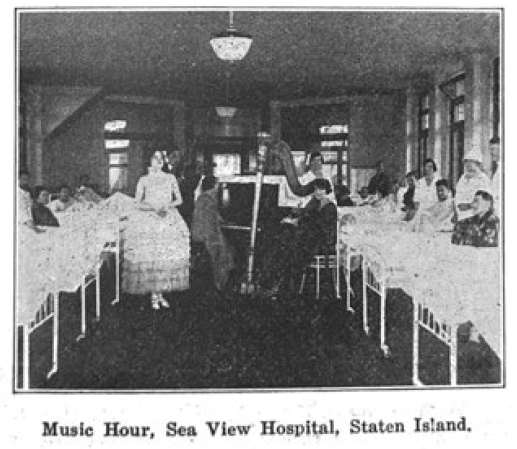
A photograph of music therapy in progress that appeared in an article Ilsen authored in 1927
To help her patients, Ilsen developed a treatment plan called “organized music.” The goals of “organized music” were simple but ambitious: to soothe injured soldiers’ nerves, heal their trauma, and help them avoid further trauma that sounds might trigger.
Ilsen’s “organized music” regimen usually involved musical performances by nurses, as individuals or in small groups. Ilsen discouraged nurses from playing music that was too sad or exciting, but found that patients responded well to familiar, folksy tunes. She especially recommended light, cheerful music, such as excerpts from Jacques Offenbach’s The Tales of Hoffman. And she told other nurses, many of whom were her students, that they should be pleasant, dress nicely, and avoid interfering with doctors. Even instrument choice mattered in this early form of music therapy. Ilsen banned cellos, trumpets, and portable organs, probably because organs were often played at funerals.
In all, Ilsen felt that music would be a “soothing syrup and [an] energizing force for those ill in military and civil institutions. . . . Under a definitely organized plan, [music] is bringing its curative blessing to suffering humanity” (Ilsen, “Music’s New Vocation”).
Ilsen could be strict, with close attention to detail. Consider her “Do Nots” for music therapists in hospitals, excerpted below. But she was strict for good reason. As she put it, “the psychological state of a sick person is usually exceptionally sensitive, and what may seem an insignificant detail to one in health may assume great importance to the same person when ill” (Ilsen, “Music’s New Vocation”). In her time, Ilsen operated on observation and intuition, but today there is evidence that music therapy is beneficial for treating PTSD. Studies are ongoing.
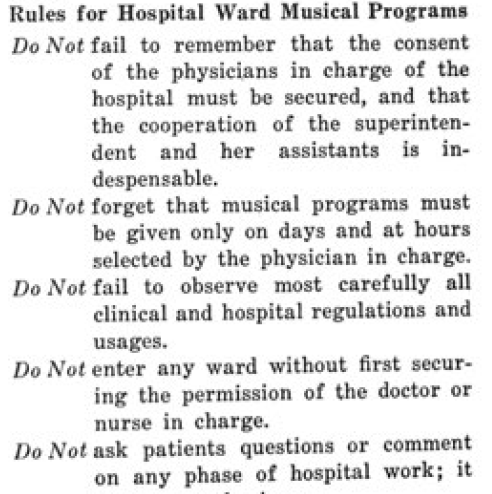
Some of Ilsen’s Do Nots for music therapists in hospitals
Looking past WWI, Ilsen believed music therapy could be used to treat conditions far beyond shell shock. In that sense she was ahead of her time, predicting that one day there would be music therapy programs in all major hospitals. She even envisioned hospital staff playing music to calm patients undergoing anesthesia and surgery—a common practice today. Ilsen also published musical “prescriptions,” suggesting specific types of music for different illnesses, like tuberculosis, rheumatism, or “incurable diseases.”
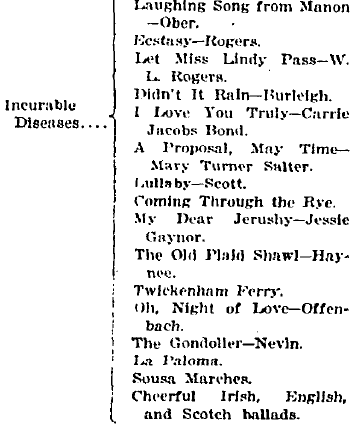
Ilsen’s prescriptions for “incurable diseases,” ca. 1925
After the war, Ilsen continued her music therapy work, bringing music therapy programs to hospitals across New York State. She later taught music therapy at Columbia University, helping to train the next generation of music therapists at one of the first formal programs in the field.
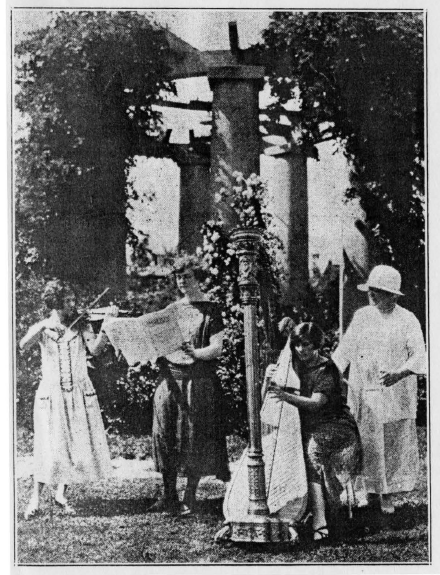
Women musicians playing music on a hospital lawn, ca. 1926, location unknown
In sum, Ilsa Maude Ilsen’s career shows how music therapy emerged at a critical moment in history—when war, technology, and social change were reshaping both medicine and society. What began as an experiment in hospital wards became a lasting contribution to modern health care.
And it all started with a unique idea: that music might heal the wounds no one could see.

Briana Nave holds a PhD in musicology from the University of North Carolina at Chapel Hill. She is an incoming postdoctoral research associate in gender and sexuality studies at the Pembroke Center of Brown University for the 2026–27 year. Her primary area of research concerns the uses of music in modern medicine and medical ideas about musical ability. Her dissertation, “Anatomy of a Musician: The Medicalization of Musical Ability in the Modernizing United States, 1890–1932,” interrogated the institutional and cultural intersections of music and scientific medicine during the modernist period, especially around the time of World War I.
Learn more about this topic:
Learn more about the American Music Therapy Association


NPR podcast episode on music and art therapy to treat brain disorders