
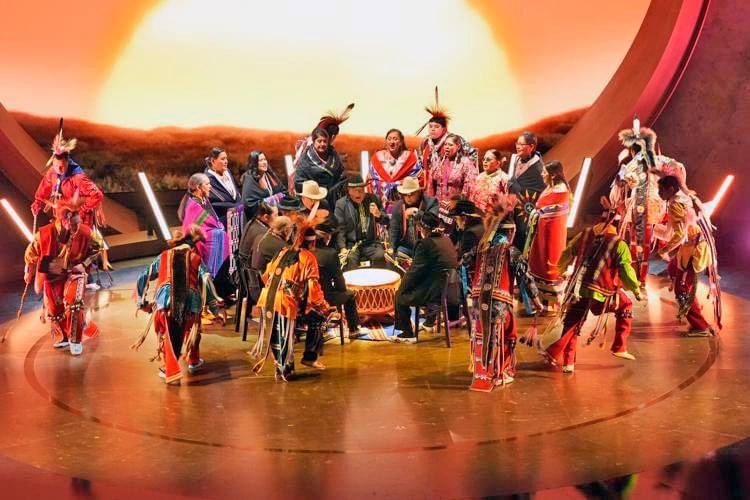
When you hear a song, it tells a story. Some stories tell of a hidden, dark past, while others tell of victory and triumph. The story of “Wahzhazhe (A Song for My People),” by Osage composer and singer Scott George, tells both.
In 2021, filmmaker Martin Scorsese was directing Killers of the Flower Moon about what the Osage Nation in Oklahoma calls the “Reign of Terror”—a time when the Osage People were murdered and robbed for their oil money in the early 1900s. The film starred Leonardo DiCaprio, Robert De Niro, and Lily Gladstone (Blackfeet/Nez Perce), and was produced by Apple Studios. Composer Robbie Robertson (Mohawk), Scorsese’s longtime collaborator, wrote most of the film’s soundtrack. But Scorsese wanted to end his film with Osage music and dance as a testament to Osage strength and resiliency.
That is when Scott George, who belongs to the Osage Nation, got a call—one that would change his life as a singer, and for Indigenous musicians everywhere.
Killers of the Flower Moon (2023), official trailer
Scott remembers: “It was in August 2021 when the film crew approached us about recording a final scene at the end of the film. Martin Scorsese had attended our [Osage] ceremonial dances that June in 2021, and seeing us dancing I believe is what inspired Martin to shoot this last scene. . . . We mulled over using songs from our ceremonial dances quite a bit. But we decided that [with] most of those songs, somebody’s going to claim [one as their own] or somebody’s going to say, ‘that’s my grandpa—that’s his name in there.’ So we knew they would be off limits. [And] we had some obscure tapes from singers that were Osage, but these tunes mimicked what the Poncas [another Tribal Nation close to the Osages] had and really didn’t distinguish ourselves as Osages. It was September when we decided we’re just going to have to make our own [music].”
Through September, Scott hashed out ideas for the music with Vann Bighorse, his brother and the Osage Nation’s Language Director, as well as Kenny Bighorse, the Osage “head singer” based in Pawhuska, Oklahoma. Scott and Vann each wrote and recorded a song for Scorsese and Roberston (the movie’s composer) to consider.
Scorsese and Robertson chose Scott’s song, called “Wahzhazhe,” for the film. “Wahzhazhe” is the name the Osages call themselves, and the song is sung in Osage musical style and language.
Killers of the Flower Moon (2023), final scene featuring “Wahzhazhe”
After the release of Killers of the Flower Moon in 2023, Apple Studios wanted to submit “Wahzhazhe” to the Academy Awards for a nomination in the Oscars’ Best Original Song category. But there was one huge problem. Osage songs have always been taught by listening and never written down, and the Academy required submissions to include a lead sheet in Western musical notation.
Osage music and Western music are completely separate musical styles. To go through the nomination process, they would have to be combined somehow. The requirement that music be in Western notation now stood between “Wahzhazhe” and the Oscars.
To address this problem, Apple hired someone to create a lead sheet. But that person fumbled the job. Scott recalls: “The person Apple hired texted me and says, ‘I can’t do this, don’t have time to get it done.’ As far as I know, he didn’t even look at it.” So Scott took matters into his own hands, seeking the expertise of a friend: Mo Pair.
“I’m on my way to Chicago to sing for a Tail Dance,” Scott remembers. “And that’s when I saw my friend there, Nico Peña. He was helping us sing. I told Nico about the lead sheet and asked if he knew how to get ahold of Mo Pair who could help with the transcription. Mo used to transcribe Native songs into Western notation.”
Scott called Mo in the fall of 2023 and asked him to transcribe “Wahzhazhe.” Mo accepted.
Mo Pair is not Native American. But he was taught Southern Plains singing, the style Osages perform in, by Ponca singers in northern Oklahoma. “In the summer of 1990,” Mo reflects, “I gained an audience with Harry Buffalohead, a Ponca singer in White Eagle, Oklahoma, with [a] friend. We were taken in as his students. It was a master and apprentice situation.”
Mo completed the lead sheet in just three days of intense work. He explains: “I had been thinking a lot about transcribing Southern Plains singing into the Western scale, into the five-bar staff. Then, in the late 2000s while attending school in Beaumont, Texas, I bolted upright in my sleep and saw the rhythm of two against three, interwoven together. I saw that it was a hemiola. The drum was beating in two but the singing was in three.”
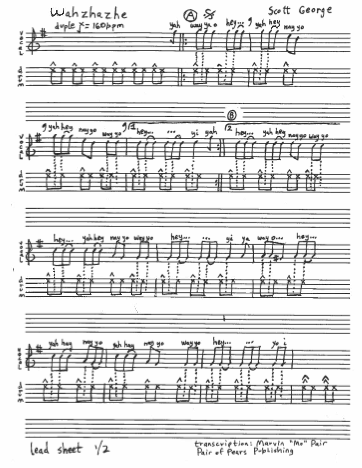
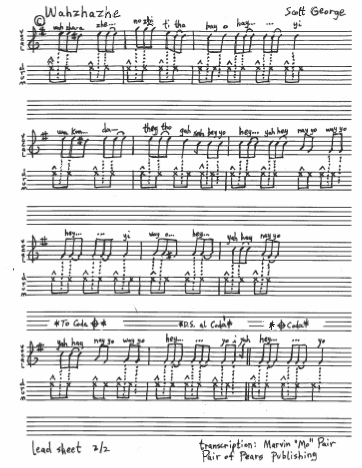
Transcription of “Wahzhazhe,” created by Mo Pair
Once complete, Scott sent the transcription to Apple, who then sent it to the Academy of Motion Picture Arts and Sciences, which oversees the Academy Awards. “Wahzhazhe” reached the top fifteen, and then the final five nominees in the Best Original Song category. On March 10, 2024, Scott took the stage at the 96th Academy Awards with Osage singers and dancers. For the first time, Osage music was performed live in one of the biggest cinematic institutions in the world.
Performance of “Wahzhazhe” at the Academy Awards
Unfortunately, Scott did not win the Oscar. But a big victory happened at a luncheon a few days earlier. The president of the Academy’s music branch approached Scott and apologized to him. “You didn’t have to do that,” she said. “We would’ve accepted your song without that score. From here on out, I’m going to make sure that if [a submission] has to do with Indigenous music, [it] won’t be required to be written down.”
Because of Scott and Mo’s work, the requirement changed. Future Indigenous musicians would not have to struggle the way Scott did to get their music into the Academy. The real victory of “Wahzhazhe” was twofold. On the one hand, Killers of the Flower Moon and the Oscars performance showcased Indigenous music to the world. On the other hand, Scott and Mo’s work opened the door for future generations of Indigenous musicians to have their music featured on the same platform. Scott’s nomination, with the help from Mo, was a major achievement for Indigenous Peoples.
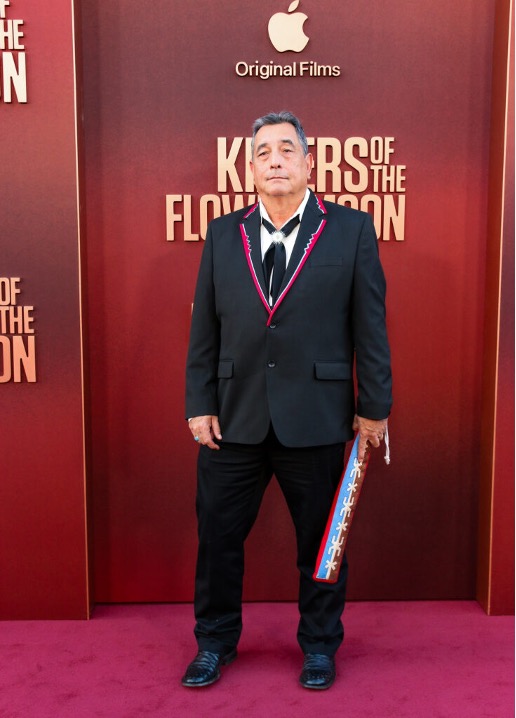
Scott George. Source: Echo Reed/Osage News, https://osagenews.org/osage-singer-scott-george-on-his-oscar-nomination/.

Scott George is an artist, singer, composer, and Oscar nominee for the song in Martin Scorsese’s movie Killers of the Flower Moon. Scott has been singing for over forty-five years and has composed songs for several veterans and Tribal leaders. Scott resides in Del City, Oklahoma with his wife Taveah. He is a proud grandfather with fourteen grandchildren and one great grandchild. He is Osage/Sioux, and is the great grandson of the late Dan Scott, a WWI veteran, grandson of the late Dan Scott Jr. of Niotaze, Kansas, and son of Delores Scott currently residing in Del City.
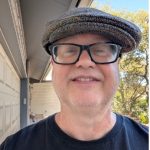
Marvin “Mo” Pair is an environmental engineer and a musician. He works as a civil engineer with the Air Force and he plays folk music, rock music, and Native American Plains music. He enjoys singing with his wife in the duo Smoke and Flowers and singing lead with his group Drum, Enemy Horse. He is also a professor at San Antonio College where he teaches humanities from a powwow perspective.

Maxwell Yamane (“yah-mah-nay”) is an Assistant Professor of Ethnomusicology at the University of Oklahoma. His research interests include Indigenous language reclamation and music (primarily among the Kiowa Tribe in Oklahoma), powwow music and dance, and Indigenous social movements and music. Maxwell sings with Southern-style powwow drum groups Ottertrail and Zotigh Singers. He is dedicated to culturally responsible and collaborative scholarship in ways that serve the community.
Learn more about this topic:

Interview with Scott George about the Oscar nomination on CBS News Los Angeles

Interview with Scott George with Offscreen Central

Coverage of the Oscars story by Osage News